How Is a Hybrid Hair Transplant Applied?
Before the procedure, the level of hair loss, the existing hair structure, the condition of the donor area and the recipient area are assessed.
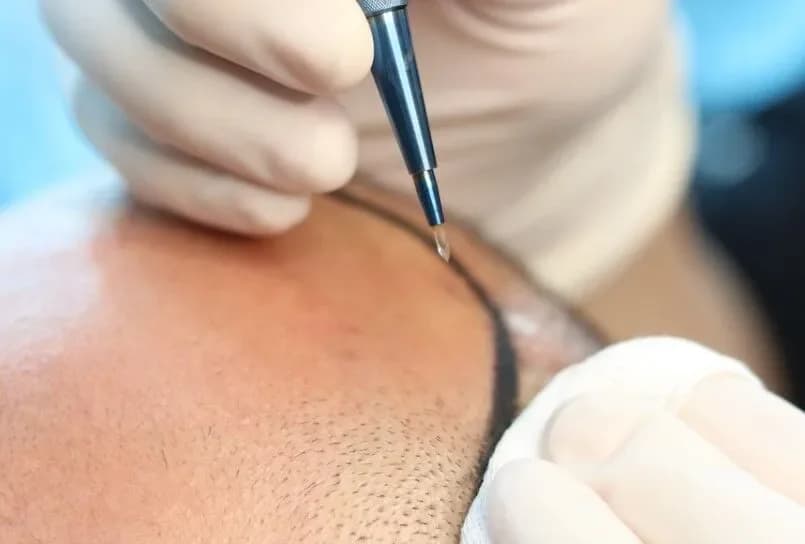
After the hairline and recipient areas are defined, the grafts needed are taken one by one from the donor area with the FUE method.
The grafts are placed using the technique suited to each planned area.
Front Area – DHI Pen Technique
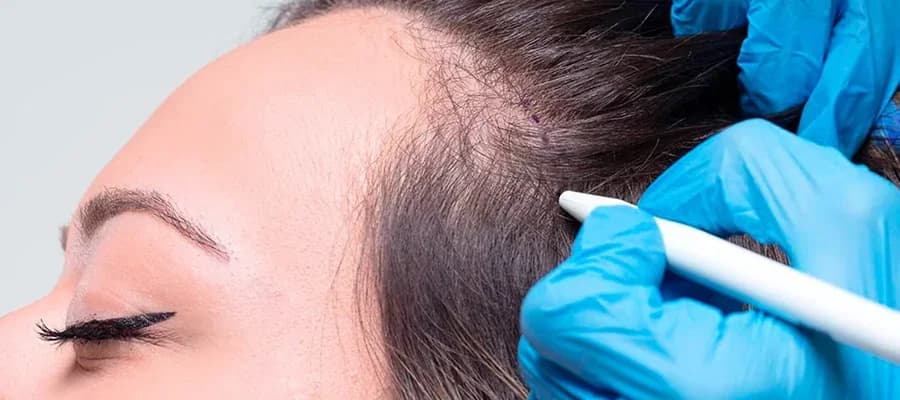
The front hairline and front area are among the most aesthetically sensitive areas in a hair transplant.
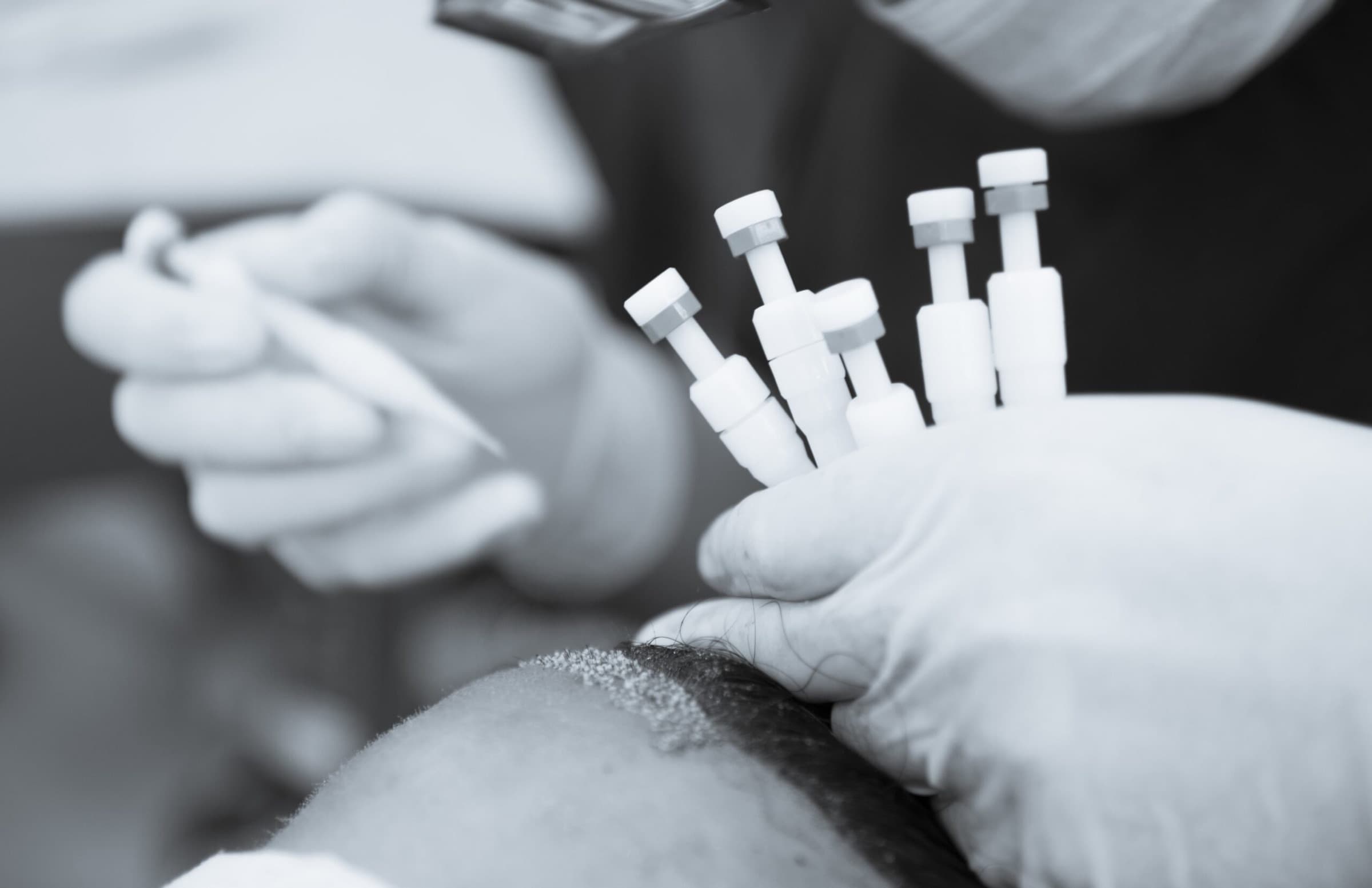
In this area, the grafts are placed at the set angle and direction using a DHI implanter pen.
The design of the front hairline, the exit directions of the hair and the placement of the grafts are carefully planned to create a natural look.
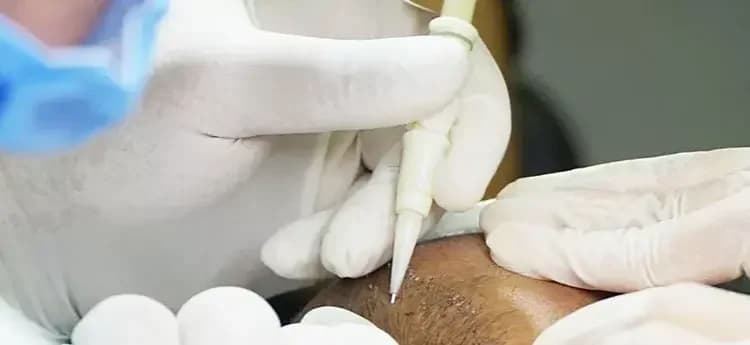
Middle and Back Area – Sapphire FUE
The Sapphire FUE technique is used in the middle and back areas.
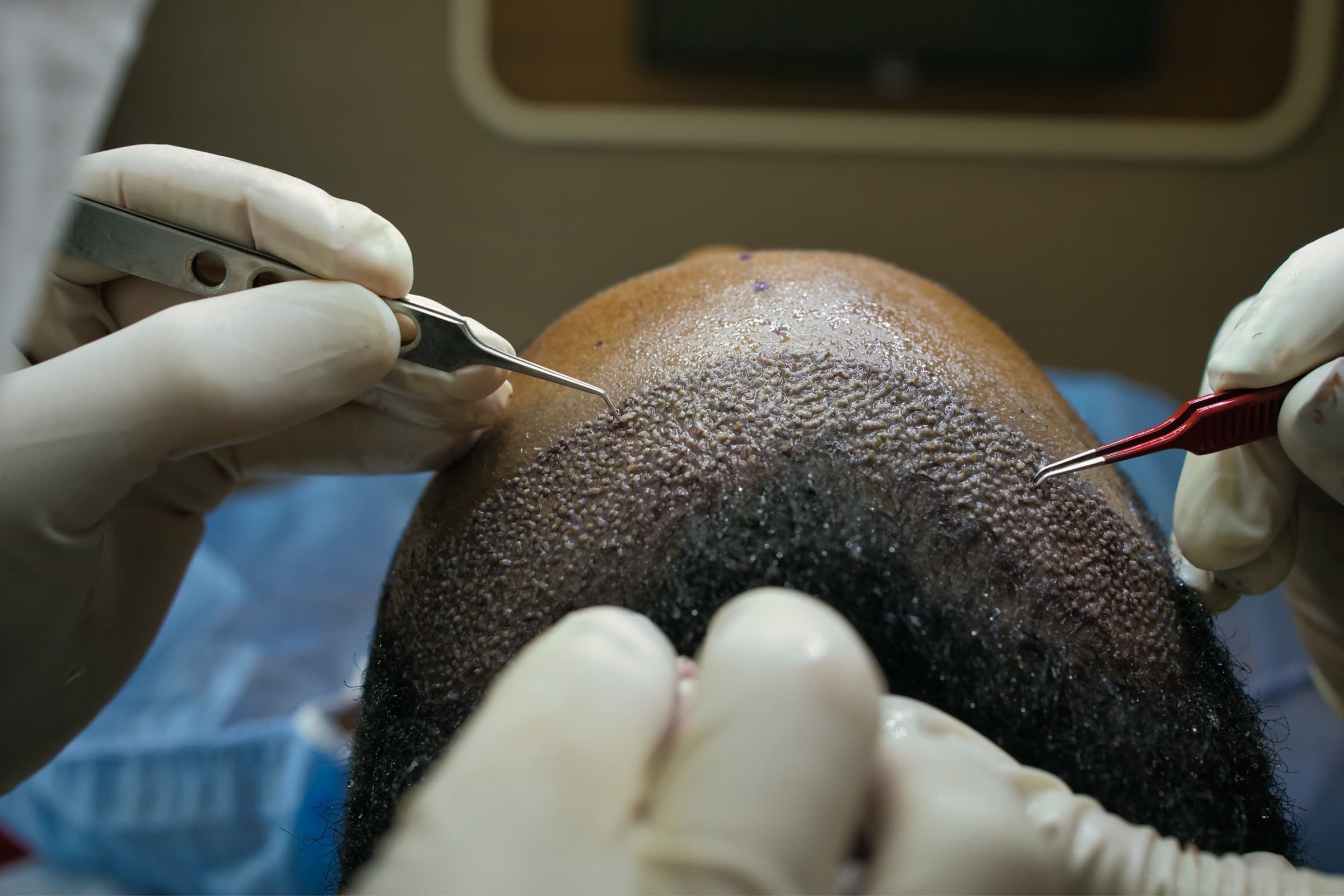
The channels opened with sapphire blades are prepared according to the set hair directions and the implantation plan. The grafts are then placed into these channels.
In this way, the DHI and Sapphire FUE techniques are used within the same procedure according to the needs of different areas.
The Advantage of Hybrid Hair Transplant
The main advantage of a hybrid hair transplant is that the methods needed in different areas of the scalp can be combined in a single procedure.
While precise work is done in the front area with the DHI pen technique, larger areas in the middle and back are implanted with the Sapphire FUE technique.
This creates a complete implantation plan from the hairline to the back.
Who Is It Suitable For?
Hybrid hair transplant can be applied to people who need detailed, precise work in the front area while also planning a transplant over larger areas in the middle and back.
The suitability of the method is determined by assessing the person's level of hair loss, the condition of the donor area, the recipient area and the hair structure.
Personalised Hair Transplant Planning
Every patient's needs in a hair transplant are different.
Before the procedure, the following are assessed:
- Level of hair loss
- Density of the donor area
- Hairline
- Recipient area
- Number of grafts needed
- Natural exit directions of the hair
to create a personalised implantation plan.
After the Procedure
After a hair transplant, redness, sensitivity and crusting may be seen in the treated areas. In the first days it is important to protect the treated area and follow the care recommended by the clinic.
The implanted hair grows over time.
New hair usually starts to appear from the 3rd month. By the 6th month the density and look become clear; the result is largely complete within 6–8 months.
The hair may continue to thicken and gain density during this period.
A Natural Look with Hybrid Hair Transplant
A successful result in a hair transplant comes not only from implanting grafts but from designing the hairline correctly, planning the exit directions of the hair and distributing density correctly across the areas.
In a hybrid hair transplant, using the DHI and Sapphire FUE techniques together creates a special plan for different areas of the scalp.
At Nilhair Clinic İzmir, our goal is an aesthetic look that suits your face and existing hair, from the hairline to the back.