
Beard transplant is a procedure that permanently transfers the person's own follicles to the beard area for people with thinning, gaps or hair loss in the beard and moustache area.
Beard transplants usually use follicles taken from the nape. Before the procedure, a personalised beard design is created by assessing the face structure, the current beard and moustache density, the areas with gaps and the person's expectations.
In the procedure, suitable follicles are taken one by one from the donor area with the FUE method. The prepared grafts are loaded into special Choi pens and implanted directly into the beard and moustache area.
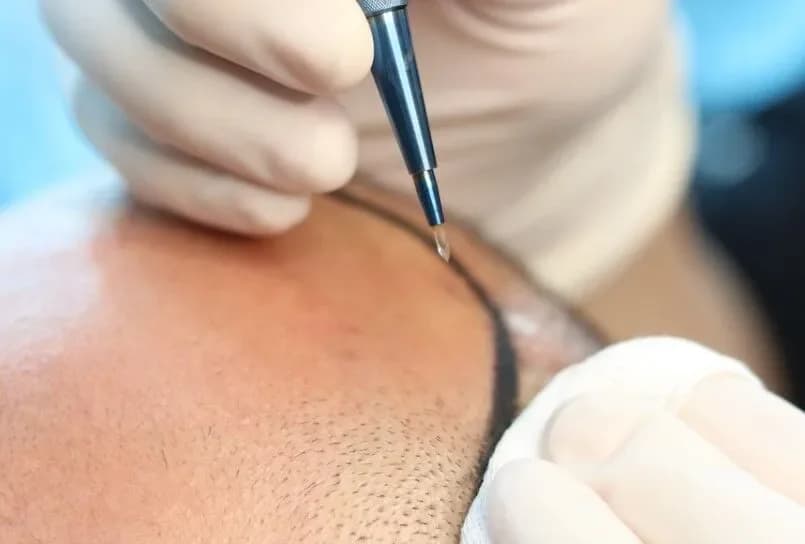
The DHI method does not require channels to be opened in advance. Each follicle is placed directly with a Choi pen at the set direction and angle.
How Is a Beard Transplant Performed?
The procedure is performed under local anaesthesia.
First, the face structure, the current beard and moustache density, the beard line and the areas to be transplanted are assessed. A natural-looking beard design is created according to the person's expectations.
The donor area is usually the nape between the two ears. Suitable follicles are taken one by one with the FUE method.
The grafts are prepared and loaded into Choi pens one by one. The follicles are then implanted directly into the recipient area.
In this procedure without channel opening, the direction and angle of each follicle are determined according to the natural structure of the beard.
Natural Direction and Angle in the Beard Area
For a natural look in a beard transplant, it is not enough to place the follicles in the right area. The natural hair direction and angle in each area must be taken into account.
The exit directions of the hair differ on the chin, cheeks, sideburns, moustache and under the chin.
For this reason, in placements with the Choi pen, the direction, angle and position of each follicle are planned according to the natural structure of the area.
By placing the follicles with the direction and density of the existing beard in mind, the aim is for the implanted hair to grow in harmony with the existing beard and create a natural-looking beard.
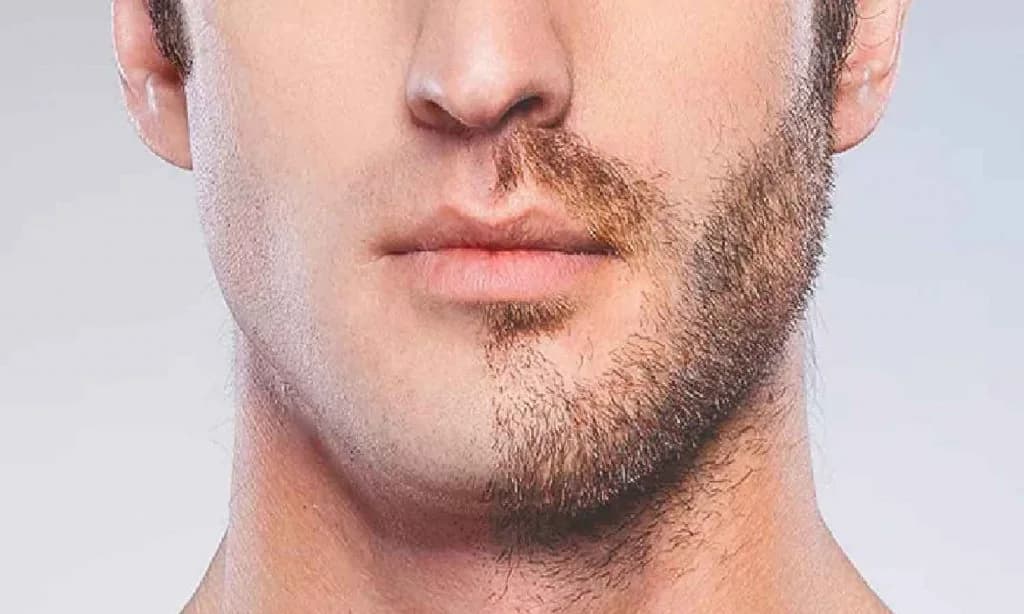
Personalised Beard and Moustache Design
A standard beard line is not applied in a beard transplant. The design is planned according to the person's face structure, current beard density and expectations.
The start of the beard line, the density of the cheek area, the jaw structure, the sideburns and the moustache area are assessed together.
The areas where a denser beard is wanted are defined, and the number and distribution of follicles are planned accordingly.
The aim is not only to close gaps but to create a natural-looking beard shape that suits the face.
Who Is a Beard Transplant Suitable For?
A beard transplant may be considered for:
- Men with no beard or moustache growth due to hairless chin (köselik)
- Men with thinning or gaps in their beard
- Men who want to increase beard and moustache density
- People whose beard growth is insufficient in some areas
- Men with a naturally sparse beard due to genetics
- Men who have lost beard hair due to incorrect procedures or trauma
- Men who want to recreate or define their beard line
- Men with loss of density in the moustache area
Especially in cases of hairless chin, follicles can be transferred to the areas needed to create a natural look in the beard and moustache area.
However, the adequacy of the donor follicles, the characteristics of the hair and beard and the recipient area must be assessed together before the procedure.
Advantages of DHI Beard Transplant
Placing the follicles directly without opening channels in the DHI (Choi) method allows controlled work, especially in facial areas such as the beard and moustache that require precision.
Because each follicle is placed separately with a Choi pen, its direction and angle can be determined during implantation according to the natural structure of the area.
Especially when densifying between existing beard hair, it is important to place the follicles in harmony with the existing beard.
After a Beard Transplant
After a beard transplant, mild redness, sensitivity and swelling may be seen in the treated area. These effects vary from person to person.
The first wash is done on day 3. From the third day, the care and washing method recommended by our clinic is used.
In the first days it is important to protect the treated area and follow the care instructions given.
Shock loss may occur within the first 10–15 days. During this period the visible hairs may fall out, but the follicles remain under the skin.
New hair starts to grow from around the 3rd month. In the following months it continues to grow longer, thicken and adapt to the beard area.
The final result usually starts to appear within 6–8 months. The development time varies from person to person.
Aftercare for a Beard Transplant
Because the follicles used are taken from the scalp, they have the structure of scalp hair in the early period and keep growing.
As the implanted follicles adapt to their new location, they continue to grow in a way that suits the beard structure.
During healing, protecting the treated area and following the care instructions given by our clinic are important for a healthy process.
Why Is a Beard Transplant a Special Procedure?
Because the beard area directly affects the look of the face, the direction, angle, density and distribution of the follicles are very important during implantation.
Creating the beard line and a placement that blends with the existing beard does not depend only on the number of grafts. Correct design, correct direction and placing the follicles at the right angle are the key elements of a natural look.
In the DHI (Choi) technique, loading each follicle into a pen separately and implanting it directly makes this a procedure that requires precision.
For this reason, a beard transplant must be planned personally, taking the person's face structure and existing beard into account.
Beard Transplant in İzmir
For beard transplants, at Nilhair we assess each patient's face structure, current beard density and donor area individually.
Preparing the follicles taken with the FUE method one by one, loading them into Choi pens and implanting them in the beard area in line with natural directions and angles are the key stages of the procedure.
Our aim is not only to fill the gaps in the beard area but to create a balanced, natural-looking beard that suits the face.
To get information about beard transplant and learn the right plan for you, you can share up-to-date photos of your beard and donor area with us.